

Migraine: a Miracle Cure?
My life has been changed by Amlodopine, and I'm not the only one

About twenty years ago, around the age of 40, I started suffering with migraines: ghastly headaches usually centered behind my left eyeball, accompanied by severe nausea which frequently resulted in repeated vomiting.
In the early days, they occurred about two or three times a year but gradually they became more frequent, until a couple of years ago, by which time they were happening once a week, sometimes twice.
They usually started very early in the morning and left me no option but to stay in bed most of the day. If I lay very still and quiet in a darkened room, there was a chance I could avoid vomiting. But it was a double edged sword: not throwing up usually meant the migraine would last longer.
To make things worse, these attacks nearly always struck at the weekend. I would be fine during the week, when I was working, and then lose Saturday and/or Sunday when I was looking forward to doing the things I wanted to do. I lost count of the times we had to cancel seeing friends, or the occasions when my wife would go out on her own, my agony made worse by the frustration of missing yet another meal, movie, concert or opera.
Initially I took paracetamol and ibuprofen, usually to little effect, before graduating to Migraleve - paracetamol with codeine and buclizine (for the nausea). This helped for a while, particularly when the attacks were milder, or if I took them the moment I sensed an attack coming on, but often there were no signals.
I tried to work out whether my migraines were caused by any of the common food triggers: coffee, chocolate, cheese, alcohol and even tomatoes, which became a fixation for a while. But this proved totally inconclusive: at one point it seemed that not drinking actually made things worse.
My long-suffering wife speculated that my migraines were caused by stress. While I don’t think I’m a particular stressy person, I am someone who holds things in, so she may have been right.
At one point I became convinced the attacks were seasonal as, for a couple of years, I appeared to get them more often during the spring and autumn. But then that changed too, and I became slightly paranoid that my endless reading on the subject was having an impact on the frequency and intensity of the headaches: if a research paper suggested Brie as a potential trigger, I would get a migraine after eating Brie. But as soon as I forgot about the possible link to Brie, I could eat it without problem.
Six years ago, with the frequency increasing, I went to my doctor who prescribed Sumatriptan, a treatment for vascular headaches like migraine, to be taken immediately on symptoms appearing. These helped enormously, assuming I was able to keep them down. But I still lost a day with each attack. While the headache would go after a couple of hours, I would still feel groggy and lethargic, and the following day I’d be tired and short of energy, just as I would have been had the migraine been allowed to take its course.
But Sumatriptan is not a preventative; it made no difference to the frequency of my attacks, it just helped me sleep them off. So another visit to the doctor, and a prescription for Pizotifen, a little known migraine prophylactic which seemed to reduce the frequency of attacks for a while (although there may have been other factors at play).
With the number of lost days mounting, I went to see a migraine specialist, who, after taking a comprehensive history and formally diagnosing migraine for the first time, prescribed amitriptyline, a pre-SSRI era anti-depressant rarely prescribed for depression these days, but still used for migraine. But again, no effect.
I had resigned myself to spending a day a week in bed for the rest of my life when my doctor called me in for some routine tests. Having reviewed my blood pressure and cholesterol (both of which had been a little high at previous check ups), I was prescribed Amlodipine, a drug commonly used to treat high blood pressure.
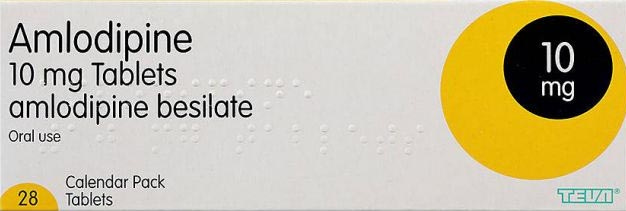
That was six months ago. My last full blown migraine was two days after I started taking amlodipine. I haven’t lost a day to migraine since last October.
It feels like a miracle: completely by accident I appear to have found a cure. Elated, but also intrigued, I set about researching this miracle drug, only to find remarkably little information on its use to prevent migraine: just a couple of case studies, one from 1998 and another from 2007, covering four people in total.
And then I discovered the US website Drugs.com, an open access database that allows people prescribed certain drugs to report on their experience. It turns out I wasn’t alone: It has a page entitled Amlodopine for Migraine Prevention full of testimonials from long term migraine suffers, many far worse than me, whose lives were transformed when they were prescribed amlodipine, not for migraine, but for raised blood pressure. Here are three of those testimonials:
‘I have suffered from weekly migraines and frequent headaches since the menarche at 11 - they have ruined my life and left me dependent on Rizatriptan and Solpadeine Headache tablets several times each week - days of disabling pain and feeling completely wiped out. Spent a lifetime seeing different GPs and neurologists, and trialing different tablets none of which made any difference except for causing horrendous side effects. Then I was diagnosed with extreme hypertension at a routine 66-year-old birthday check and was put on Amlodipine 5mg. Not only did it reduce my BP from 195/126 to 135/78 (no side effects), but no migraines or headaches in the six weeks since I started on it. I've gone from relieved to actually really angry that no one ever suggested trying Amlodipine for migraine prevention - I know it's prescribed off-label but you would think someone in all the specialists I've seen over the years would have it in their toolbox and might have prescribed it. What a wasted life.’
‘I am a 62-year-old male, served as a fireman for 33 years, and suffered from migraines at least twice a week from the age of 21. Mine are being related to food, alcohol, vinegar, etc. It has been hell for years. I have tried all the so-called preventative medicines to no avail but managed to control them with Imigran. Last year I was prescribed Amlodipine 5mg for slightly high blood pressure. To my amazement, my migraines have stopped completely. So I have gone from twice a week to zero! Life-changing to say the least. I now enjoy alcohol, pizza, cheese, vinegar, chocolate! Hope this helps someone to live a normal life.’
‘Suffered migraines for many years, getting them once a week or more. Doctor prescribed Imigran at onset, not much use when you are sick with them. Anyway, I was told I had hypertension and prescribed Amlodipine, 5 MG initially and then 10 MG! Almost immediately, the migraines were gone. I changed blood pressure medication once on the advice of my doctor, the migraines came back within two days. Back on Amlodipine for me, no more migraines. I went to the pharmacist who explained why it works in this way. I would recommend it. Miracle stuff.’
Recent research has suggested a possible connection between migraine and high blood pressure, but the jury is still out: nobody is quite sure if raised blood pressure is a cause of migraine, is caused by it, or if common genetic factors are involved in both conditions. But I wanted to understand how this drug was so effective in stopping my migraines.
Amlodopine is one of a class of drugs known as calcium channel blockers. These work by widening and relaxing bloods vessels, and thus lowering blood pressure by reducing vascular resistance without any effect on cardiac output. Essentially they improve the flow of blood around the body.
So it makes sense that, whatever brings on a migraine in the first place, the pain it causes through swelling, contraction or spasm in certain blood vessels in the head, might be ameliorated by a chemical intervention that relaxes those blood vessels.
During my research, I learned that calcium channel blockers were discovered by a German pharmacologist named Albrecht Fleckenstein in 1964, the year I was born. I shall be grateful to Dr Fleckenstein for the rest of my life.
Interestingly, the testimonials on Drugs.com do include a few people who were prescribed amlodipine for migraine by enlightened physicians. So why aren’t more doctors trying it?
Of course, a single website with 60-odd positive reports doesn’t mean that amlodipine will be effective for everyone. And it can have side effects, though happily I have none. But there are other calcium channel blockers besides amlodopine, as well as beta-blockers which, although formally recognized as a treatment for migraine, are not, in my experience, enthusiastically prescribed.
Apart from wanting to share my utter joy at being cured of what had become a severely life-limiting illness, I wrote this piece because I know there are thousands of migraine sufferers out there yet to find a treatment that works.
It is estimated that migraine affects up to a billion people worldwide. For many, as well as being deeply unpleasant to experience, it has devastating impact on their ability to enjoy life. If you are one of those people and you’ve struggled to find an effective remedy, then ask your doctor about amlodipine. Honestly, it might be a lifesaver for you too.
This is incredible and helpful to me. I had migraines as a kid induced by exercise but learned if I kept my heart rate under a certain amount I wouldn’t have one. Now I’m my late 40s my cholesterol is climbing and I’ve had daily migraines for two months. It’s miserable. I will take this info to my doctor. I appreciate it.
So good to hear you have found something that makes a big difference Mark. Fingers crossed more tie passes and it shows itself to be the cure. I had my first migraine at 16, and tend to have one a year on average until 3 years ago when I have 6 in 9 weeks - a brain scan showed nothing (*Eric Morecambe face*) but by coincidence I ran into an old friend who said he really felt spirits were a big deal in his so (having just the day before bought a bottle of my favourite Lagavulin) I stopped drinking my 3-4 nights a week glass of whisky to give it a go, and haven't had a migraine since. I suspect there is no trigger that fits everyone, and maybe hence no single cure, but if you can find what works for you - and do what you have so generously done, and share it - it can make such a huge difference to quality of life. Thanks again, and if you know anyone who fancies a bottle of Lagavulin...