

Why Leonardo should have stayed in Italy
And the most beautiful building in the world

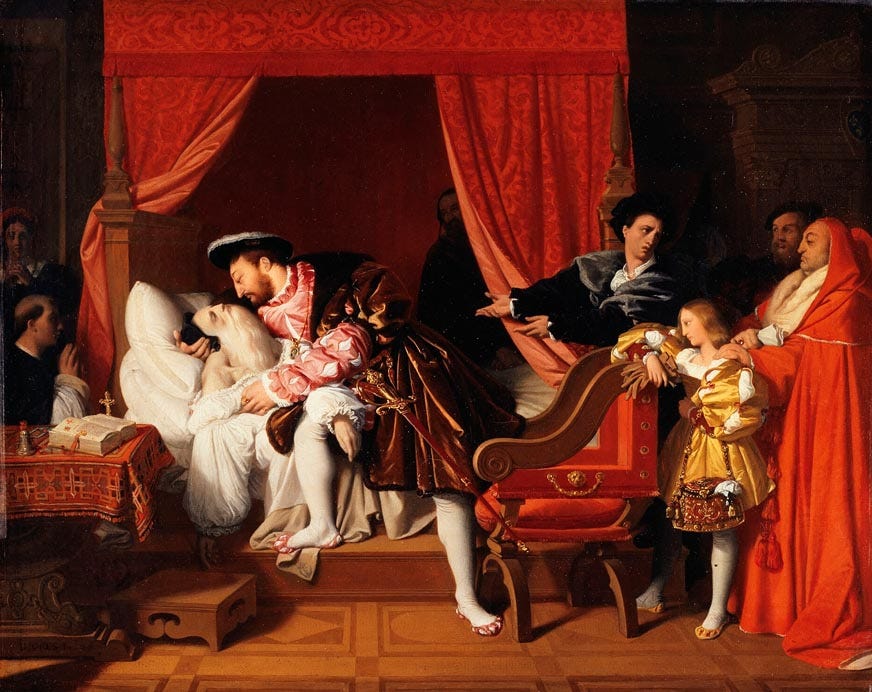
I really enjoyed this latest post by Christina Patterson. Apart from reminding me how much I miss Italy, and I’ve only been home two weeks, the bit on Dante’s tomb - in Ravenna, not Florence - is beautifully written and quite hilarious.
For anyone who hasn’t visited Florence, the empty tomb-shaped monument to Dante Alighieri to which Christina refers is located in the Basilica di Santa Croce, just a short walk from the iconic Duomo, where tourists queue for hours to get in. Being a little way from the centre, Santa Croce is explored by only a small fraction of the cultural pilgrims who descend upon the renaissance capital each year.
This, of course, makes for a much lovelier visit for those of us who do make the effort. And it’s well worth it.
Apart from the fine spectacle of the empty tomb, designed by Stefano Ricci and completed in 1808, and now renamed Dante’s Cenotaph, the Basilica houses the fully-occupied tombs of Galileo, Michaelangelo, Machiavelli and Rossini, all interred within a few yards of each other. It’s a mightily impressive sight, but no Dante, and no Leonardo da Vinci.
In 1516, Leonardo relocated to France - taking the Mona Lisa with him - and took up residence in Amboise at the Chateau du Clos Lucé.
If you ever find yourself in the eastern Loire Valley - and you should make the effort both for the fabulous wine and the sheer number of beautiful chateaux - you must visit Clos Lucé, as it now houses one of the most fascinating small museums in the world, focussed entirely on the great Italian’s life and work.
When he died there, just three years later, Leonardo was laid to rest in the Église Saint-Florentin at the nearby Chateau d’Amboise. But during the French Revolution the church was badly damaged and many of its graves defiled.
Today all that (possibly) remains of Leonardo is a pile of bones that are currently being subjected to DNA analysis. You can read more about that project in this fascinating article. And no, I’ve never previously read anything in Popular Mechanics either.
Had he lived out his final years in Italy rather than France, Leonardo would presumably now be resting unmolested between Galileo and Michaelangelo in the Basilica di Santa Croce. Perhaps it’s not always wise to follow the money.
There are many other reasons for visiting Santa Croce: so much fabulous art, including frescoes by Giotto and Taddeo Gaddi and a sublime memorial to Florence Nightingale by the British sculptor, Francis William Sargant. The Basilica’s website appears to claim that Nightingale is buried there, which will come as news to the parishioners of St Margaret of Antioch in East Wellow. But to be fair, she was born in Florence.
Elsewhere in the complex you will find Giorgio Vasari’s remarkable The Last Supper, completed in 1547, but extensively damaged in the catastrophic floods of 1966 when millions of irreplaceable art works and books were lost, along with the lives of 35 people.
Vasari’s masterpiece remained hidden from public view until the funds were raised for a 12-year restoration project, finally completed in 2016. It now hangs on cables connected to a mechanism which ensures that, in the event of another flood, it will be automatically lifted out of harm’s way. Leonardo himself would have been impressed at such ingenuity.
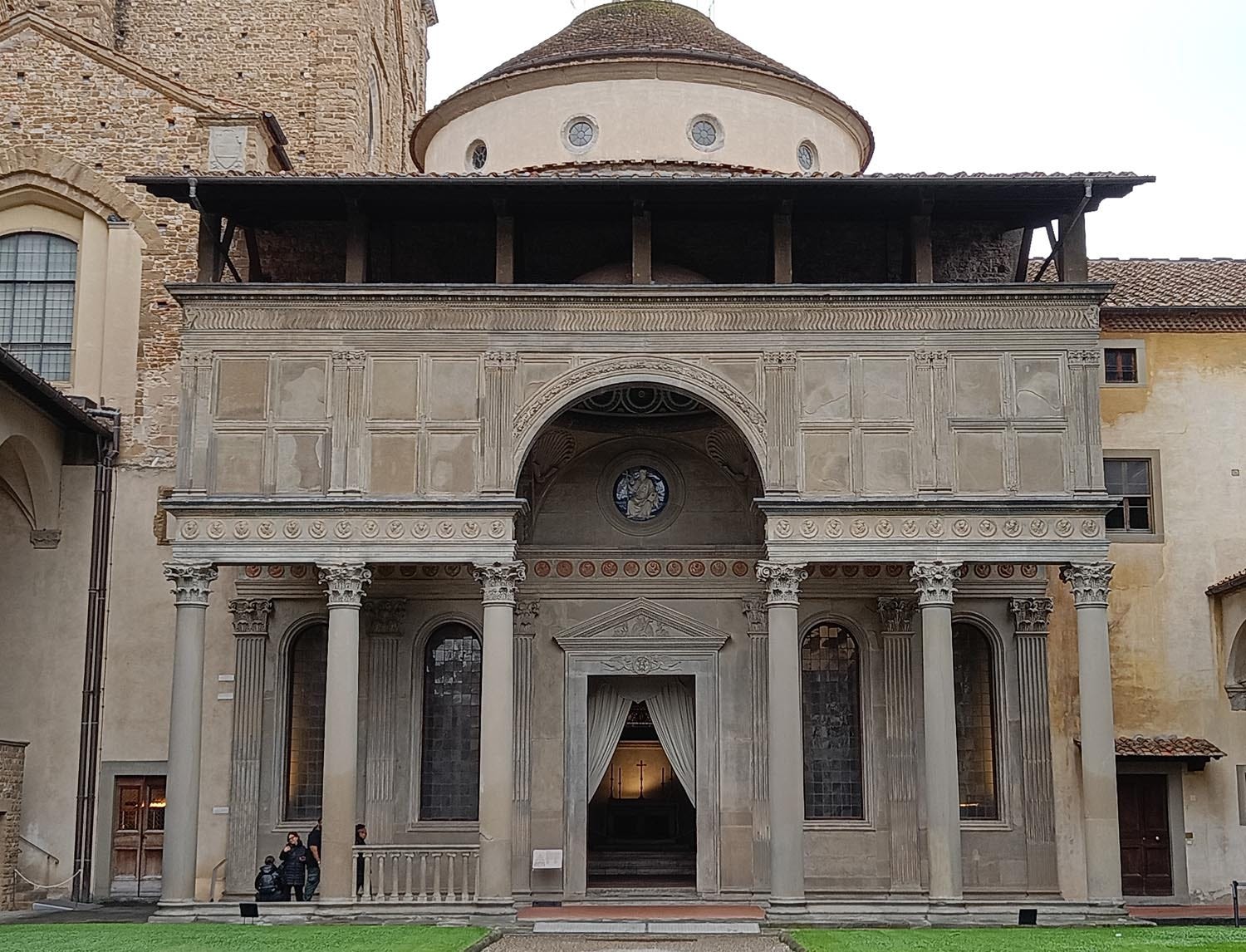
But the highlight of my visit last October was the exquisite Pazzi Chapel. Long assumed to be the work of Filippo Brunelleschi, experts are no longer sure. But whomever did design it was a genius of exceptional vision and, although I struggle to explain precisely why - perhaps it’s just its simplicity - it is for me one of the most beautiful buildings in the world.
Emotive and it’s wonderful to say how you were inspired and share your feelings. Perhaps we appreciate such cultural contexts when we’re away from them? You certainly arouse curiosity and open doors for us. Thanks.
I loved this piece, Mark, and am deeply honoured to have inspired it (along with Leonardo and Dante, of course). I didn't realise that Florence Nightingale was born in Florence, though I guess the clue is in the name, and had no idea about about Leonardo's move to the Chateau du Clos Lucé. Fascinating stuff! You've made me want to go to all the places you mention. We've been back less than two days and I'm already missing Italy hugely.